

Pull out your phone right now. Go ahead.
Now visit your business website.
How long did it take to load? Did you have to pinch and zoom to read the text? Was the menu a nightmare to navigate? Did the contact form even work?
If you cringed at any point during that exercise, you’re hemorrhaging customers every single day.
The Mobile Takeover Nobody Talks About
Customers can arrive from a phone while they are busy or away from a desk. Your own analytics can help you understand how visitors use your site.
And if your website looks like garbage on mobile? They’re likely to leave. Straight to your competitor’s site.
Small Businesses Get Hit Hardest
The irony is brutal: small businesses need mobile traffic the most, but they’re the least prepared for it.
A frustrating mobile visit can send someone back to the search results. Test the actual experience before assuming a desktop preview tells the whole story.
For a local contractor, restaurant, or service provider, that’s not just a stat. That’s a customer who called someone else. That’s revenue that went to your competition because your website didn’t work on a phone.
The Real-World Impact: What Mobile Optimization Actually Changes
Let’s get specific. Here’s what happens when a small business fixes their mobile experience:
Give visitors a reason to stay. Make the page easy to read and the next step clear.
Make the form easier to complete. Test it on a phone and remove unnecessary friction.
Help people explore. Make services and project photographs easy to reach.
Check the mobile version carefully. Useful content and working navigation should be available on a phone as well as a desktop.
What “Mobile-Optimized” Actually Means
This isn’t about making things smaller. It’s about redesigning the entire experience for how people actually use phones.
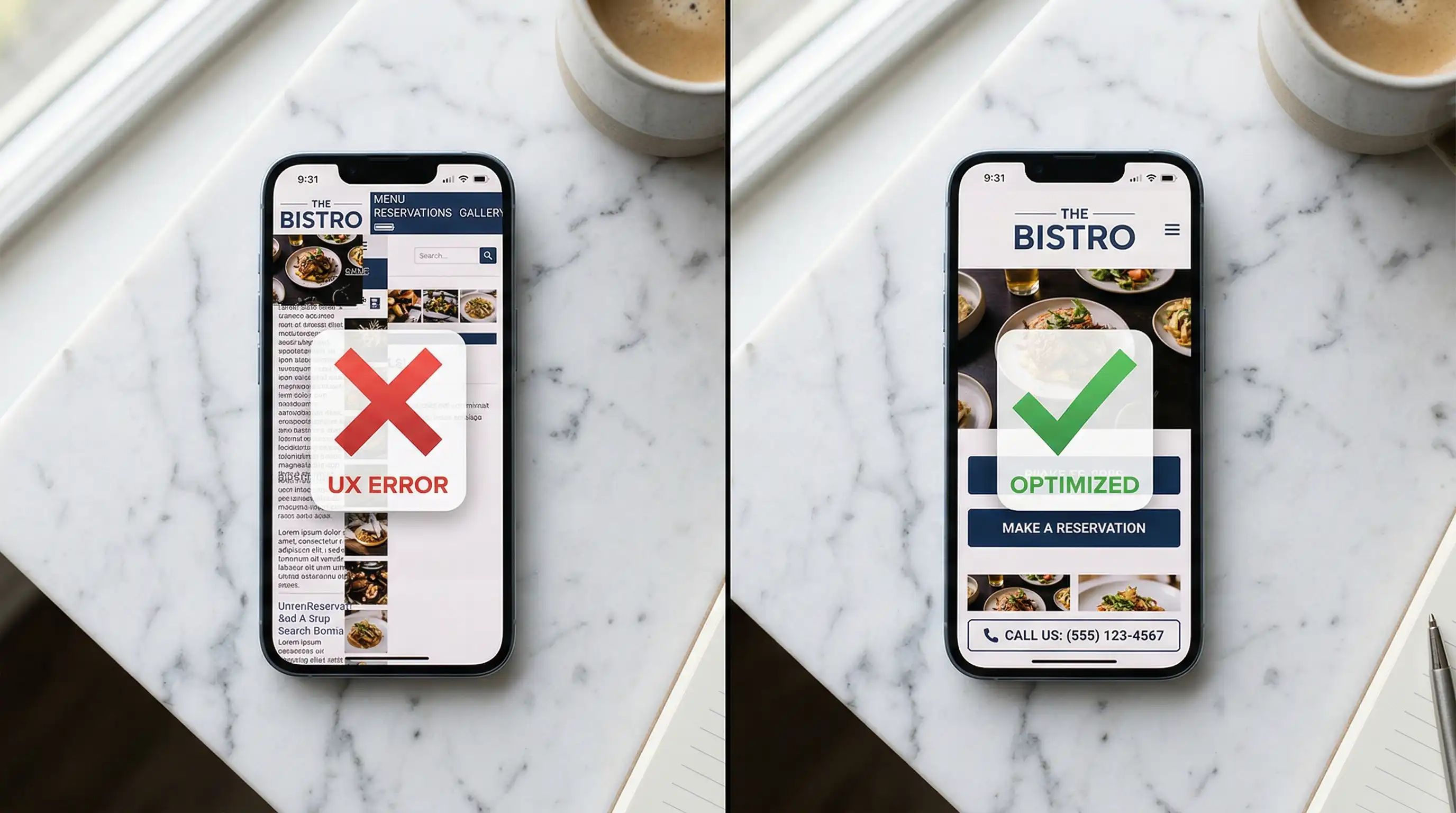
Responsive design: Your site automatically adjusts to any screen size. Text is readable without zooming. Buttons are big enough to tap with a thumb.
Fast loading: Keep images and unnecessary scripts from holding up the page. Test on a cellular connection.
Touch-friendly navigation: Menus that work with thumbs, not cursors. No tiny links packed together. No hover-based navigation that doesn’t exist on touchscreens.
Click-to-call: Your phone number should be tappable. One click should dial it. Not copy-paste gymnastics.
Simplified forms: Ask for the information you need to begin the conversation. Avoid making a phone user complete unnecessary fields.
Readable content: Short paragraphs. Larger font sizes. Plenty of white space. People skim on phones, make it scannable.
Check your own results
Look at visits and inquiries from your own site before and after changes. Keep the measurement consistent, and do not assume that a phone-number tap is an answered call.
You’re Competing Against Everyone’s Phone
The real competition isn’t other websites. It’s everything else on someone’s phone.
Text messages. Social media. Email. News. Games. Other apps compete for attention on the same small screen.
Your website shows up in that environment. If it looks like a desktop site crammed onto a phone, with tiny text and broken layouts and buttons that don’t work, you’ve already lost.
The Mobile-First Reality
Here’s what most business owners miss: mobile optimization isn’t about “also working on phones.”
It’s about being designed for phones first, desktop second.
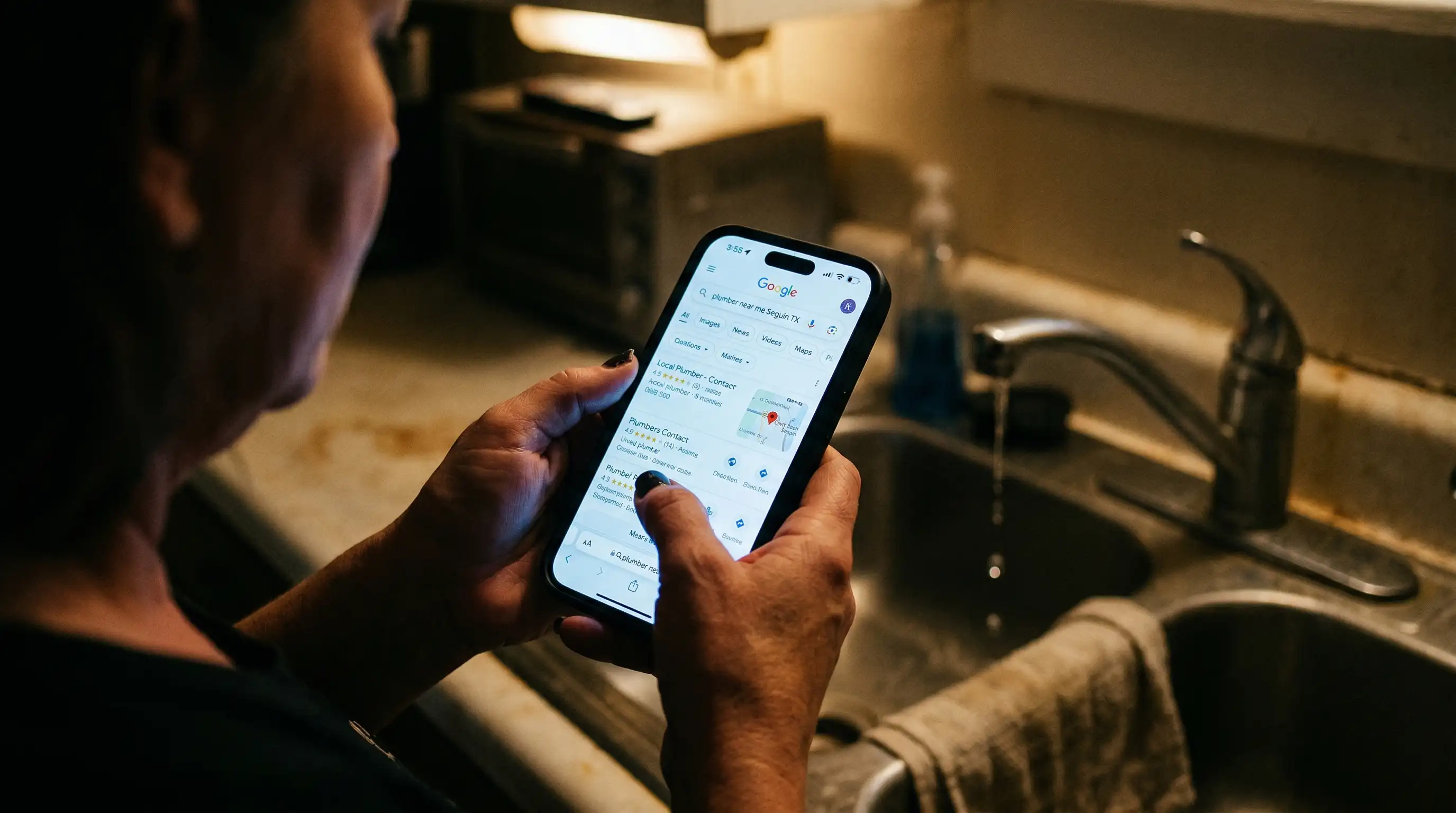
Because that’s how your customers live. They’re not sitting at desks researching contractors. They’re standing in their flooded basement, searching for a plumber on their phone. They’re stuck on the side of the road, looking for a tow truck. They’re at the kitchen table after the kids go to bed, finally getting around to finding someone to fix the fence.
Your website needs to work in those moments. On a phone. In poor lighting. With one hand. While stressed.
What To Do About It
If your website isn’t mobile-optimized, here’s your action plan:
Test it yourself: Pull out your phone. Visit your site. Actually try to use it. If you struggle, your customers definitely struggle.
Check your analytics: Look at your mobile traffic percentage. Look at mobile bounce rates. Look at form completions by device. The data will tell you exactly how much this is costing you.
Fix it: This isn’t optional anymore. It’s infrastructure. Like having a working phone number or a physical address.
A mobile-optimized website isn’t a luxury feature for small businesses in 2026. It’s the baseline expectation. The price of entry.
Your competitors are figuring this out. The question is whether you’ll figure it out first, or whether you’ll keep losing customers to businesses whose websites actually work on the device people use.
The next person searching for your services on their phone, will they become your customer, or your competitor’s?
Your website decides. Make sure it’s making the right choice.
Ready to stop losing customers to a broken mobile experience? Let’s talk about what a properly optimized website could do for your business. Because your next customer is already pulling out their phone.