
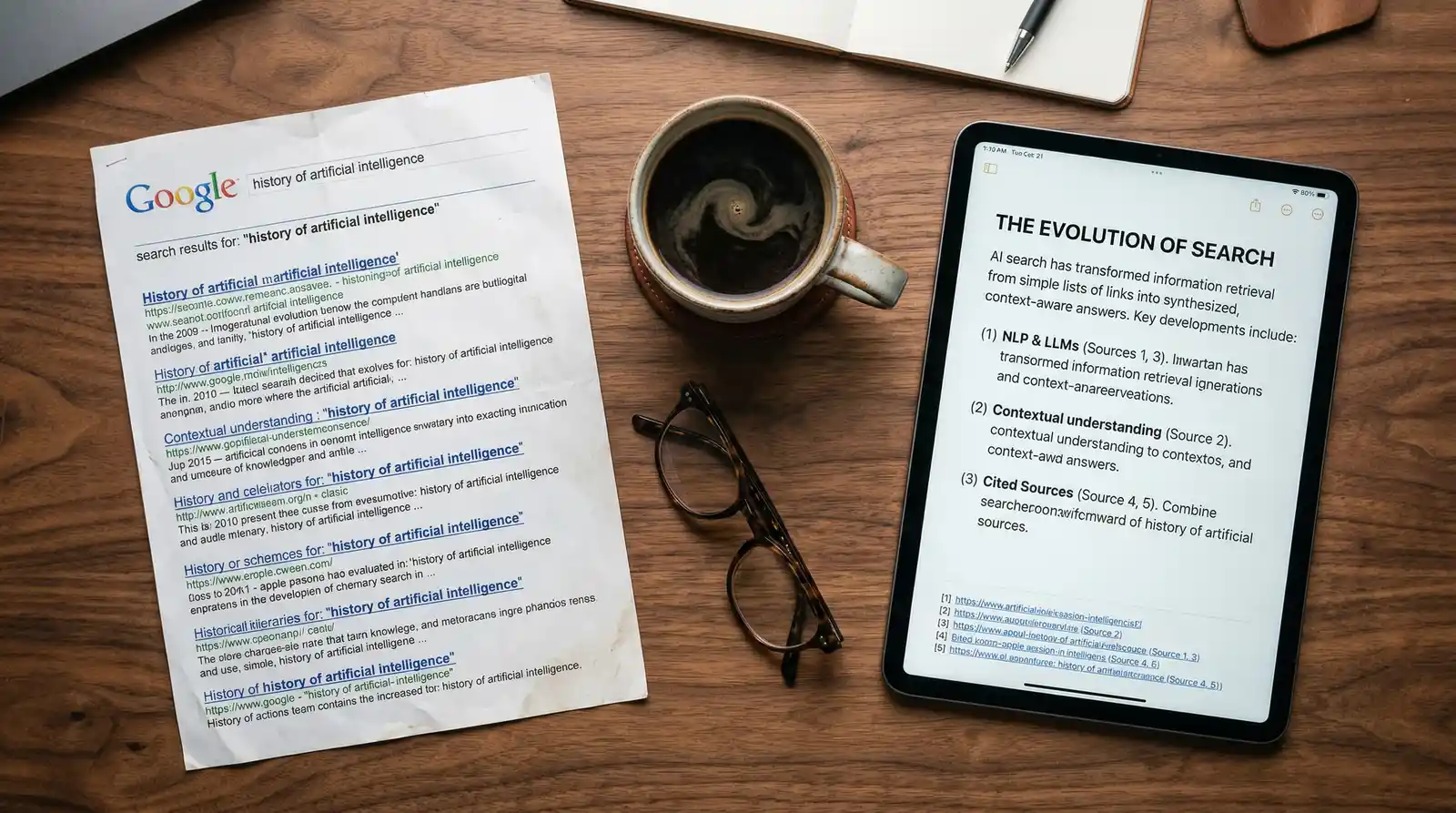
Most small business owners still think search works like it did in the past.
You build a website, try to rank a few pages on Google, maybe ask your nephew about SEO, and hope people click through and call.
That’s not really how this works anymore.
Now somebody searches for a service in Seguin, New Braunfels, or San Antonio, and before they ever click a website, Google is already trying to answer the question for them. ChatGPT is doing it. Perplexity is doing it. Google’s AI Overviews are doing it. Even map results are doing more of the filtering before the click happens.
So the game is changing.
It’s not just, “Can your website rank?”
It’s, “Does the internet trust your business enough to recommend it?”
That’s a much different question.
And if the answer is no, you can lose the lead before they ever see your homepage.
What actually changed
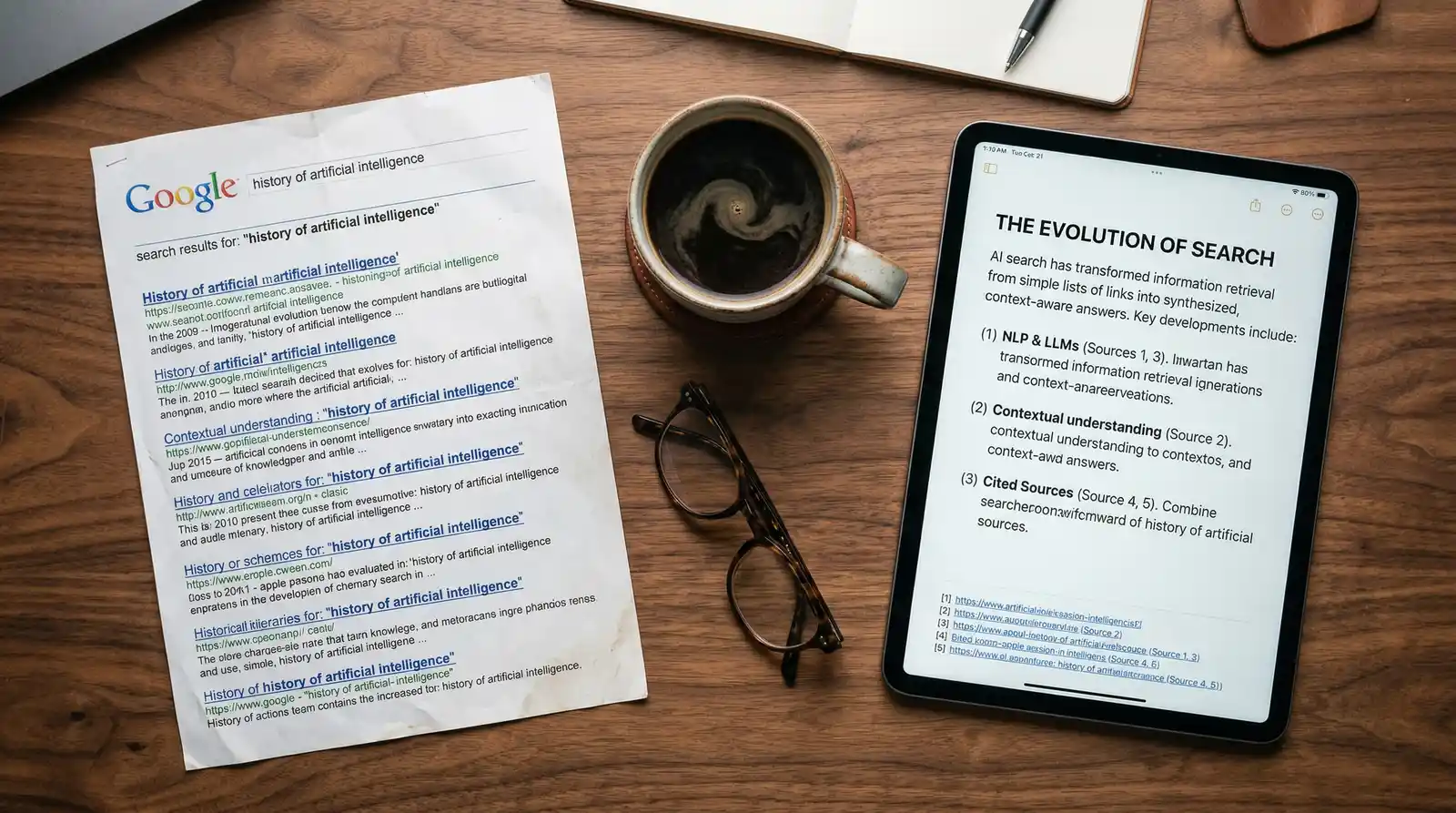
For years, search was basically a list of options.
Someone typed in “roof repair Seguin TX” or “custom home builder near me,” got ten blue links, opened a few tabs, compared some websites, and made a decision.
That still happens sometimes. But less and less.
Now search engines are trying to skip the research step for people.
Instead of saying, “Here are ten websites, good luck,” they’re saying, “Here’s probably who you should call.”
That means your business is no longer being judged only by your website. It’s being judged by the full picture Google and AI tools can piece together about you.
Your site matters. A lot.
But it’s no longer the only source of truth.
What AI search is actually pulling from
This is the part most business owners miss.
AI tools do not just read your homepage and call it a day. They pull from a messy pile of signals across the web, then try to decide whether your business looks credible, relevant, and real.
That includes your Google Business Profile.
It includes your reviews.
It includes whether your business name, address, phone number, and service info are consistent across the internet.
It includes whether your website has actual service pages or just one vague page that says “we do it all.”
It includes your photos, your FAQs, your local relevance, your site speed, and the basic trust signals around your brand.
So when somebody asks an AI tool, “Who’s a good pool builder near Seguin?” or “best concrete contractor in New Braunfels,” that tool is not just picking whoever has the prettiest website.
It’s trying to figure out who looks like the safest, most trustworthy answer.
That’s why a business with a worse-looking website can still beat a business with a better one.
Not because they’re better.
Because they’re easier to trust.

Why this matters for local businesses
If you’re a local business, this shift matters even more.
Because local search has always been about trust.
Google wants to know:
- are you real
- are you nearby
- do people like you
- do you actually do the service being searched
- are your business details accurate
- do other sources around the web confirm that you exist
AI search just turns up the pressure on all of that.
A thin Google Business Profile, outdated hours, outdated reviews, no service-specific pages, and inconsistent business listings used to hurt you quietly.
Now they can keep you out of the recommendation entirely.
That’s the real risk.
You’re not just fighting to rank higher. You’re fighting to be included in the answer.
What small businesses need to do now
This is the good news: the solution is not some magic AI hack.
It’s not chasing every new tool. It’s not paying somebody to cram “AI SEO” into a proposal and hope for the best.
It’s getting the fundamentals right.
First, clean up your Google Business Profile.
That means real photos. Correct hours. Accurate categories. Clear service descriptions. Updated information. Real activity. If your GBP looks neglected, you’re starting behind.
Second, get serious about reviews.
Not fake ones. Not weird ones. Just a real process for consistently asking happy customers to leave one. Reviews do two jobs now: they influence humans, and they help search systems understand what people actually trust you for.
Third, fix your business information everywhere.
If your phone number is different on Yelp, your old address is floating around on a directory site, and Facebook says one thing while your website says another, you’re creating doubt. Search engines hate doubt.
Fourth, build actual service pages.
If you offer five services, those should probably not live as five bullets on one generic page. Each service should have its own page with real detail, local context, and language your customers actually use. (This is one of the core reasons I build hand-coded custom sites instead of template pages.)
A page called “Concrete Driveways in New Braunfels” is useful.
A page that just says “we offer residential and commercial solutions tailored to your needs” is fluff.
AI can tell the difference. So can humans.
Fifth, publish content that answers real questions.
Not filler. Not “Top 10 Tips” nonsense written for nobody.
Real questions.
How much does this cost? How long does it take? What’s the difference between option A and option B? What should I ask before hiring someone? What mistakes should I avoid?
That kind of content helps in two ways: it builds trust with actual customers, and it gives search engines more useful material to pull from.
Sixth, make sure your site is fast and usable on mobile.
You don’t need a perfect Lighthouse score to win business. But if your site drags, loads weird on a phone, or buries the contact button, you’re making it harder than it needs to be.
What happens if you ignore it
This is the part that sneaks up on people.
You usually don’t get some dramatic warning that your business is falling behind.
It’s quieter than that.
A couple fewer calls this month.
A few more quote requests going to someone else.
More moments where you know people are looking for what you do, but somehow they’re not landing with you.
And because you can’t see the full path that person took, it’s easy to blame the wrong thing.
You blame the economy.
You blame ad spend.
You blame seasonality.
Sometimes those are real factors. But sometimes the truth is simpler: somebody searched, an AI or search engine summarized the market, and your competitor looked easier to trust.
That competitor may not have the better service.
They may not even have the better website.
They just did a better job sending trust signals.

The bottom line
Search is not dead. Websites are not dead. SEO is not dead.
But the old version of search, where your whole strategy was “rank a page and hope they click”, is fading.
What matters now is whether your business is clear, credible, consistent, and easy for search engines and AI tools to understand.
That’s the new game.
The businesses that figure this out early are going to win a lot of easy ground while everyone else is still operating with an outdated plan.
And honestly, that’s the opportunity.
Most small businesses are behind on this.
If you tighten up your fundamentals now, you do not need to outspend everybody. You just need to be easier to understand and easier to trust.
That’s a winnable fight.
Want to know if your business is visible to AI search?
I’ll audit your website, Google Business Profile, and local trust signals and show you where you’re strong, where you’re weak, and what to fix first. See how I approach local SEO for Hill Country businesses, or get in touch here.